
1. Structural Strength & Wind Resistance
Why It Matters: Must withstand strong winds, heavy rain, or snow loads.
Buyers ask for wind load ratings (e.g., 130–160 km/h).
Often require engineering certifications based on local codes.
2. Material Quality & Finish
Why It Matters: Prevents rust, corrosion, and cracking over time.
Most sought materials: Q235/Q345 steel, aluminum alloy, or hot-dip galvanized steel.
Surface finish: powder coating, HDG, or spray painting.
3. Height & Pole Type
Why It Matters: Determines the illumination area and pole’s purpose (urban street, rural road, expressway).
Common heights: 6m–12m for roads, 25m+ for high mast.
Types: conical, octagonal, round tapered, straight, or decorative.
4. Compatibility with Fixtures
Why It Matters: Buyers want poles that work with various luminaires (LED, solar, smart fixtures).
Must match arm/bracket size, luminaire weight, and tilt angle.
5. Pole Arm Design & Quantity
Why It Matters: Impacts light spread and aesthetic.
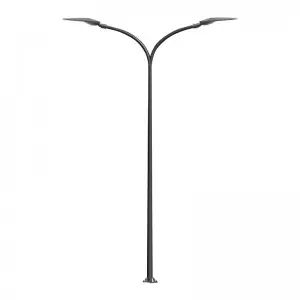
Buyers look for single-arm, double-arm, curved arm, or decorative arms.
Custom arm styles help match urban design.
6. Anchor Base or Embedded Type
Why It Matters: Installation method impacts stability and construction cost.
Anchor base (flanged) with anchor bolts is common in cities.
Buried/embedded light poles are used in more rural or low-cost setups.
7. Corrosion Resistance (Galvanization Quality)
Why It Matters: Affects lifespan and maintenance cost.
Buyers often request hot-dip galvanization ≥ 80 µm.
Some want salt-spray test data for coastal use.
8. Solar or Smart Pole Integration
Why It Matters: Increasing demand for future-proof infrastructure.
Buyers may ask for:
Built-in solar panel brackets
Battery housing compartment
Sensor or camera mounting points
Smart pole capabilities (5G, EV charging, environmental sensors)
9. Aesthetic or Decorative Options
Why It Matters: Enhances the visual identity of parks, resorts, or urban spaces.
Buyers want custom colors, engravings, ornaments, or themed designs.
10. Certifications & Compliance
Why It Matters: Needed for public tenders or regulated markets.
Common requests: ISO 9001, CE, EN40, RoHS, ASTM standards.
Some also want structural calculations or welding inspection reports.
BONUS: Installation & Service Factors
Ease of installation (access holes, wiring routes)
Availability of accessories (arms, base plates, grounding)
Warranty (usually 5–20 years depending on coating & structure)
Availability of CAD drawings & IES files
Post time: Aug-01-2025